Most gravel roads that become impassable were not built badly. They lost their shape, and once water sits on a road instead of running off it, the surface goes in one season.
Camber does the work
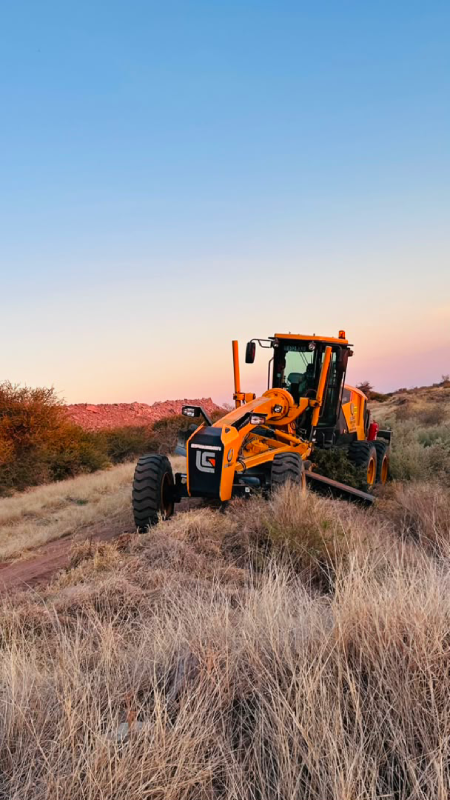
A correctly crowned road sheds water to the sides before it can soften the layer. Flat or reverse-cambered sections hold water, form potholes and then corrugate. Restoring camber with a grader is cheaper and faster than repairing the damage that follows losing it.
Drainage is part of the road
Side drains, mitre drains and culverts are not extras. If water has nowhere to go once it leaves the surface it comes back into the layer from the shoulder. Clearing and reshaping drains before the rains is the highest-value maintenance you can do.
Material matters, but shape matters more
Gravel with the wrong plasticity either ravels loose or turns slippery when wet. Where the wearing course is genuinely worn out it has to be replaced, but adding material to a road with no camber and blocked drains is money spent twice.
Set a maintenance interval
Haul roads under heavy traffic need blading on a schedule, not on complaint. Agreeing an interval and a standard up front keeps the route open and keeps tyre and suspension costs down for everyone using it.
We maintain and rehabilitate gravel roads and haul routes across Botswana. Ask us about a maintenance programme.